MUSIC IN THE AGE OF DRUMPF, PT. 3: SOUNDGARDEN’S “JESUS CHRIST POSE.”

Exploitation of religion for personal gain did not begin with Donald Trump or the current Republican party. It goes back to the time of Christ himself. But it’s become an American pastime as rich and widespread as baseball or systemic racism, thanks to the likes of such charlatans as Pat Robertson, the late Jerry Falwell, and Joel ‘my teeth are so bright they’re a road hazard’ Osteen.

Over the last year and a half, Donald Trump has been suckling at the teat of the religious right with aplomb, from appearances at anti-LGBTQ organizations to constantly reminding people that The Bible is his favorite book (and that he doesn’t know a single passage by heart) to choosing a man who caused an AIDS epidemic in his own state when he was governor as vice president. Trump played the religious right like a harp from hell (to borrow a rather biting quote from Danny DeVito in Batman Returns), convincing them that a conniving, vagina-grabbing, misogynist adulterer was somehow the better choice for president than the woman who’s currently becoming a pastor. Trump may not know how to quote The Bible, but he sure knows how to exploit it.

Soundgarden recorded “Jesus Christ Pose” in 1991 for their breakthrough album, Badmotorfinger. Only a few years had passed since incidents such as the Jim & Tammy Faye Bakker and Jimmy Swaggart scandals were top stories, convincing the public that televangelists were hypocritical and disingenuous in their faith, concerned primarily with bilking their viewers, which consistently largely of the Midwest working class and little old ladies who wanted something to do with their retirement funds. Whether it was their devastating hateful homophobic rants about AIDS or their numerous extramarital affairs, t.v. preachers were rightfully considered a stain on the moral fabric of America. And yet, they still found and are finding audiences.

“Jesus Christ Pose” is one of the angriest songs I’ve ever heard; the guitars and drums are fast and furious, like the musical equivalent of a stampede. And then, after a minute or so, comes the voice from on high, like a freight train running through your senses:

“Aaand you staaare at me in your Jesus Christ Pose…”*

Chris Cornell was renowned for the authority and intensity he could conjure in his vocals, his well-honed distortion and grit skills adding power and weight to his already commanding voice. On “Jesus Christ Pose,” he sounds like he’s trying to level a small town with his voice. The anger is palpable. I don’t know if Cornell was necessarily a Christian, but he did speak highly of Jesus Christ, and is certainly incensed at what’s going in his name.

Most of all, “Jesus Christ Pose” is about calling out the martyr complex used to gain sympathy with the gullible, who beg for money in the name of God so they can fuel their hedonistic lifestyle under the guise of piety. Chris is having none of that shit.

The most biting passage in the song’s five minutes comes in its final verse, where Cornell asks pointedly whether these heretics are willing to make any real sacrifice:

“Arms held out

In your Jesus Christ pose

Thorns and shroud

Like it’s the coming of the Lord

Would it pain you more to walk on water

Than to wear a crown of thorns?

It wouldn’t pain me more to bury you rich

Than to bury you poor.”*

The song ends with one of Cornell’s most insane screams, a culmination of the anger and rage he’s been conveying throughout the song.

“Jesus Christ Pose” became an instant classic, perhaps second to “Black Hole Sun” as the band’s most recognizable song. The controversial video, which featured the band performing in a desert amidst flashes of subliminal religious imagery, was banned from MTV, giving the song even more notoriety.

“Jesus Christ Pose” is a song the band performed regularly right up to Cornell’s tragic passing in May; he never did a version where he didn’t sing the lyrics with conviction and venom, probably because the song has never stopped being relevant. Thanks to the current political climate, it will likely be for another 25 years.

*All credit goes to Chris Cornell, Kim Thayil, Matt Cameron, and Ben Shepherd, Copyright © Sony/ATV Music Publishing LLC, BMG Rights Management US, LLC

REVIEW: Netflix’s ATYPICAL.

CAST: Keir Gilchrist, Jennifer Jason Leigh, Brigette Lundy-Paine, Amy Okuda, Michael Rapaport

Me and my girlfriend both have Asperger’s syndrome, a high functioning form of autism. We also love watching t.v. and movies. These two commonalities combined when I first saw the trailer for Atypical, a Netflix original series about a young teen with autism who starts dating for the first time in his life.

Autism has been portrayed fairly often in recent years in pop culture; from the obvious entries such as Rain Man to the unconfirmed theories that Sheldon Cooper is an aspie, the spectrum has become a common motif. It has been tackled with various degrees of success in terms of accurately portraying it, but also as being sympathetic to those in real life with the condition. The latter was my big worry with Atypical.

Atypical is the story of the Gardner family, and how their dynamic often hinges on the progression and regression of Sam (Keir Gilchrist), a teenager with high functioning autism who needs constant attention. His mother, Elsa (Jennifer Jason Leigh, in an Emmy worthy performance) has spent her whole life monitoring Sam’s behaviors and quirks, to the point where she almost lost almost any sense of freedom or identity of her own. By contrast, his father, Doug (Michael Rapaport, equally affective and moving), has never been able to forge a relationship with him, due to his inability to grasp the complexities of his condition and never being able to do typical ‘dad’ stuff with his son. Finally, Sam’s younger sister, Casey (Brigette Lundy-Paine), is Sam’s caregiver, providing him with lunch money at school and defending him against bullies; it’s not a role she necessarily relishes, as it interferes with her relationship, her social life, and her promising career as a track star.

When Sam’s therapist, Julia (Amy Okuda), suggests that Sam start dating and form a relationship, the Gardners’ lives are thrown into a tailspin. As Sam begins to become more comfortable with being on his own and developing his independence, Elsa is forced to confront her own lack of independence, as she has attached her entire purpose in life on her vigilance for Sam. This leads her down a path that threatens to shatter her family irreparably. By contrast, Doug begins to finally bond with his son, as Sam’s constant questions about girls and relationships allow him to finally find a subject to relate and help him with. Casey is finally given breathing room to not have to worry about Sam, although her mom’s attempts to replace Sam’s issues with hers drives a wedge between them and occasionally leads to rebellious and poorly thought out retaliations.

The most crucial and impressive element of Atypical is how much it gets right; while my own position on the autism spectrum is higher than Sam’s in terms of overall functionality and social skills, I still find myself relating to the struggles he faces early on the series: I found it impossible to smile properly at girls without looking deranged, I made grand and often inappropriate statements of affection to women who either didn’t like me back or could never be with me for practical reasons (age, etc.), I bragged about sexual misadventures at inappropriate moments. Furthermore, Sam’s relationship with my parents mirrors my own. My mother was very hands-on until I finally had to assert myself that I was capable of being independent and handling the difficulties of life and relationships, as well as basic tasks I struggled with when I was younger. My dad, like Doug, struggled for years to find common ground with me, but eventually we developed a healthy, loving and thriving relationship. And my younger sister has always looked out for me, often to chagrin of my ego and the idea that a little sister shouldn’t have to look out for her older brother.

Special credit must go to Gilchrist, who portrays Sam with a genuine sense of understanding and sympathy. It is very obvious he did the homework for the role, so to speak. His performance is up there with Hoffman in Rain Man as one of the most accurate and touching portrayals of those on the spectrum. The show’s creator, Robia Rashid, also gets huge plaudits from me, as she is largely responsible for the show’s success in handling its subject matter.

Atypical is essential viewing for families who have relatives on the autism spectrum, or just for people looking to understand the complexities of it with a better understanding.

GRADE: A

WHY BORN IN THE U.S.A. IS THE ESSENTIAL PATRIOTIC ANTHEM (FOR THOSE WHO UNDERSTAND IT).

Perhaps no hit song in the last 40 years has been misinterpreted, misrepresented and misused as much as Bruce Springsteen’s signature anthem, “Born in the U.S.A.” Every July 4th, you will hear that cannon blast synth riff and defiantly sung chorus, as millions of beer drinking yahoos sing along beating their chest thinking the song is about how flawless America is.

The misconception of “Born in the U.S.A.” began shortly after the song’s release in 1984. The album of the same name, featuring the now iconic image of Springsteen standing in front of the American flag in a pair of blue jeans, launched Springsteen to super-stardom and made him a household name; that included the White House, as Ronald Reagan decided to play the song at his various re-election campaign rallies around the countries. By putting emphasis on the chorus, which simply features the title repeated over and over again, the song lost context and left many to see it as a sort of modern day pop Star Spangled Banner.

Of course, it’s anything but. “Born in the U.S.A.” is the story of a Vietnam veteran recounting how his country failed him upon returning home, refusing to provide him with employment, benefits, or anything to help him with live with the scars of war. The song began life as a haunting acoustic number during the sessions for Springsteen’s now legendary Nebraska album in 1982, a record in which The Boss explored the darker side of the American Dream by embodying those who never attained it. The song ultimately didn’t make the final cut, leaving it to be revisited in the sessions for Bruce’s next record, which was intended to be more commercial.

The album Born in the U.S.A. was intended to be more commercial, as Nebraska failed to win mainstream success despite performing brilliantly with critics. Bruce began experimenting with more hook based melodies as well as modern drum machines and synthesizers, giving way to songs such as “Dancing in the Dark” and “Glory Days,” as well as five other Top 10 singles from the album. Over the course of the sessions, “Born in the U.S.A.” grew from a quiet acoustic dirge into a powerful, bombastic rocker, punctuated primarily by Bruce’s aggressive vocals, Roy Bittan’s iconic synth hook, and Mighty Max Weinberg’s explosive drumming; the final song was a violent masterpiece of sound and fury.

Anyone with ears and a brain can see from the first lines that the song is an indictment rather than a love letter:

“Born down in a dead man’s town

The first kick I took was when I hit the ground.

End up like a dog that’s been beat too much

Till you spend half your life just covering up.”

These are not the words of a man standing in front of his barbecue, shotgunning Coors Lights and wearing a bald eagle shirt; the narrator has clearly been neglected by his country. As his identity becomes clearer throughout the song, so does the meaning behind it:

“Come back home to the refinery

Hiring man said ‘Son, if it were up to me…’

Went down to see my V.A. man

He said ‘Son, don’t you understand?’

The song is one of many of Bruce’s sympathetic ballads devoted to the plight of the Vietnam Vet; “Shut Out the Light,” “The Wall,” “Brothers Under the Bridge,” and numerous others present a similar tale of frustration and sadness, putting a light on one of the most shameful periods in our country’s history. Through these songs, Bruce managed to give a voice to these veterans on a national scale, something they not have been achieved without him; that’s not hyperbole, Vietnam Veterans for America founder Bob Mueller has said it himself.

Unfortunately, the song became lost in translation almost immediately thanks to Reagan’s co-opting of it. The song’s chorus became a shout of pride rather than ironic detraction, and the song’s violent riff became a sound of excitement rather than fury. Of course, the blame can’t fall solely on Reagan: Bruce opening each concert on the tour – his biggest ever – standing in front of the American flag, decked out in an all American outfit consisting of ripped denim and a star-spangled bandana, looking like Rambo with his newfound muscular physique, no doubt had something to do with it.

Since its release, Bruce has worked tirelessly to re-educate Americans on the true meaning of the song, often performing it in its original acoustic form, or including PSA’s about the Iraq War before the song during the Rising Tour, or simply not performing it for many years. Despite these efforts, “Born in the U.S.A.” remains a staple of July 4th weekend.

And you know what? It really should be. If anything, “Born in the U.S.A.” becomes even more fundamentally American when you understand the song, because it speaks to the greatest freedom we have as a country: dissent. It is a song that takes it country to task for its sins, a rallying cry for us as a nation to decry jingoism and fix what’s broken. In the age of Donald Trump, where are our flaws are more apparent than ever (especially our president’s failure to provide meaningful benefits to veterans), the song’s message rings louder and clearer than ever to those willing to listen to and really understand it.

No artist in music has done a better job at analyzing the American Dream vs. the American Reality than The Boss, and “Born in the U.S.A.” is truly his magnum opus when it comes to his ability to create an honest, ‘warts and all’ portrayal of what’s good and what’s terrible about our country. Remember this when Ted ‘I Shit My Pants to Get Out of the Draft and Then Insulted Vets in An Interview’ Nugent rambles on about supporting the troops.

REVIEW: Baby Driver

baby-driver-1200-1200-675-675-crop-000000_zpsoujtutkgBaby Driver

Director: Edgar Wright

Cast: Ansel Elgort, Lily James, Kevin Spacey, Jon Hamm, Jamie Foxx, Eiza Gonzales

Rating: R

Genre: Action, Thriller, Comedy

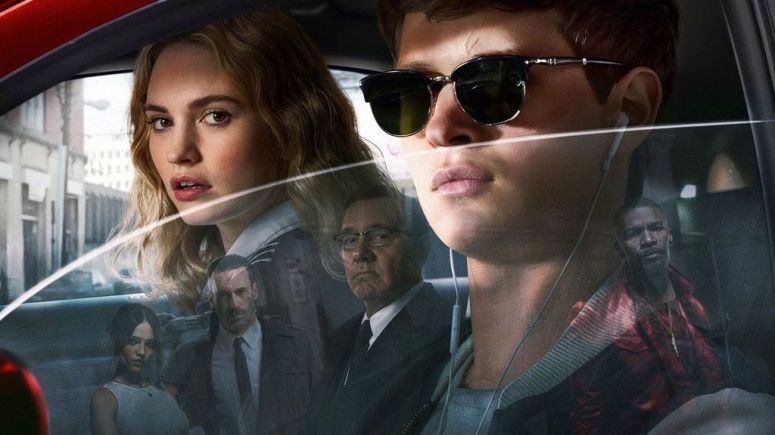
I can’t remember the last time a film intrigued me just based on a trailer as much as Edgar Wright’s latest, Baby Driver. With its solid cast, original plot and characters, and killer soundtrack, it had all the makings of a new favorite. Having finally seen it last night, I can safely say Wright not only met my expectations but exceeded them.

Ansel Elgort stars as the titular Baby, a highly skilled getaway driver for a revolving door of bank robbers employed by crime boss Doc (Kevin Spacey), whom he owes a significant amount of debt to. Baby’s driving prowess is powered by his love of music; his trusty iPod is always on hand during a job, drowning out a bad case of tinnitus he acquired in a tragic car accident as a kid. He lives with a foster parent, Joe, who is wheelchair bound and unable to speak except through sign language. It is Joe’s concern for Baby’s life of crime that is the primary motivation for him to go straight after one last gig. That is, until he meets Debora (Lily James), a diner waitress with a heart of gold and a voice like silk. Baby and Debora bond over their love of music and need to drive away to a better life, the latter unaware of Baby’s occupation.

When Doc ropes Baby in for one last job, things begin to shift into high gear when he’s introduced to Batts (Jamie Foxx), a genuine psychopath with no respect and a willingness to kill just for the fun of it. Batts’ ‘loose cannon’ attitude creates tension with Baby as well as the two other constants in Doc’s crew, lovers Buddy and Darling (Jon Hamm and Eiza Gonzales), the former of whom is the only member who seems to have some level of respect for Baby. This tension ultimately leads to Baby’s work life, home life, and love life coinciding in the worst way possible, leading to an explosive finale that words cannot do justice to.

As an action film, a love story, and even a black comedy, Baby Driver succeeds on every level. The car chases are filmed beautifully, giving the audience a vicarious adrenaline jolt without resorting to the fast paced, seizure inducing editing that highlights Michael Bay debacles. The relationship between Baby and Debora is unconventional and endearing, making you root for them from start to finish. Finally, the film is frequently hilarious, from Baby’s never ending supply of sunglasses to a mask purchasing expedition that gets lost in translations to just about every one of Foxx’s lines, few films blend together genres so beautifully.

For all the great writing and direction, what really makes Baby Driver crackle is the cast: Elgort plays Baby with the perfect mix of ‘aw, shucks’ naivety and James Dean-esque swagger, often having to rely on facial expressions and gestures as opposed to heavy dialog to make the character come to life, and doing so effectively. James is perfect as Debora; while it’s essentially a damsel role, James plays her with such a purity that it’s impossible not to endear yourself to her when her affair with Baby becomes a life threatening situation. Spacey, of course, is his usual dynamic self, playing Doc as cold and stoic, but also managing to convey a subtle layer of genuine concern for Baby’s well-being. Gonzalez plays Darling with the perfect sort of grimy sex appeal needed to counteract with James’ innocence.

Finally, there’s Jon Hamm, who simply steals the show as Buddy; aside from Baby, Hamm’s character has the most depth of any character in the film, pivoting seamlessly between friend and foe on a dime and really endearing you to him even in his sleaziest moments. His relationship with Darling, along with Hamm’s natural charisma, make him a complex antagonist rarely seen in action films these days. Though Hamm has won acclaim since his Don Draper days, his performance in Baby Driver truly shows the profundity of his skills, giving an Oscar worthy turn.

In what has been a largely hit-or-miss year for non-franchise films (Logan, Guardians Vol. 2, Wonder Woman), Baby Driver stands out as an exciting, original and instantly memorable film. See it yesterday, it’s that good.

GRADE: A

It’s Only a Victory If We Let Them Win.

I have been going to concerts since I was 8 years old. I’ve been fortunate to have seen some incredible acts put on amazing shows over the years.
 
At their best, concerts represent what music is all about: coming together, uniting us under a shared passion for a particular artist or song that has impacted our lives exponentially. Some of my fondest memories as a concert goer are those communal moments: chatting with strangers about past concerts and favorite songs as if we knew each other forever, the high fives being passed around as the lights went down, the artist-goaded audience singalongs of “Born to Run” or “Hey Jude.” It’s what great art is all about.
 
I’m sure those seeing Ariana Grande last night were looking to share the same experiences. Many may have been kids going to their first concerts.
 
When news about the bombing ripped through the headlines last night, my blood ran cold. I thought about how scary it could be to be in that environment, how dumbfounding it must have been when the mood changed from joyous to terrified in an instant. I thought back to 9/11, where security at Madison Square Garden was at an all time high and we lived with our own fears. To see them come to life is surreal.
 
The natural response to this is fear. It’s what they want. It’s what they thrive on. We can’t let it win. We can’t let them win.
 
My heart is sick this morning: for those killed or maimed, for their loved ones, for Ariana Grande. An attack on music is an attack on art, which is an attack on the human spirit. The proper response is to fight back.
 
Go to concerts, go to festivals, revel in that communal spirit. Remind yourself of how music is there to bring us together. Dance, sing, embrace. Laugh, cry. Do it all and do it together.

REMEMBERING CHRIS CORNELL, THE DEFINITIVE VOICE OF ROCK AND ROLL.

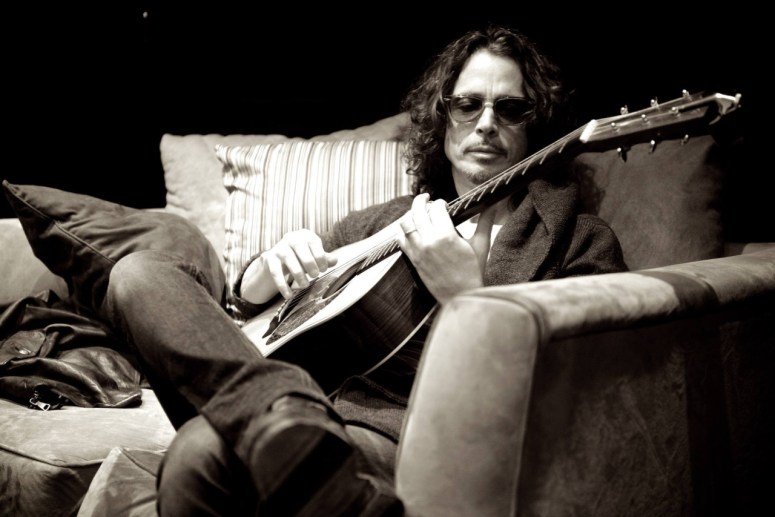
The first time I heard Chris Cornell’s voice, it was like getting a high five from God: the force and might that it hit with you with seemed something otherworldly. As a singer, Cornell was a sort of Frankenstein in the best possible sense: he could wail like Robert Plant or Steven Tyler, belt like Freddie Mercury or Paul McCartney, croon like Smokey Robinson, and emote as convincingly as Sinatra; his stylistic range ran the gamut from his signature rock belting to soul to blues to folk. Best of all, Cornell used these traits to create a style distinctly his own, an imitable instrument that influenced the future and forced the past to step up their game.

Vocally and as a writer, Cornell stood head and shoulders above his compatriots in the grunge scene: Weiland sang as good as him, Vedder wrote as good as him, and Cobain and Staley captured emotions as well as him, but no one could do it all like he could. To hear Chris at his absolute peak, one needn’t look further than 1991, when he released Badmotorfinger with Soundgarden and Temple of the Dog with the short lived supergroup of the same name; songs like “Slaves and Bulldozers,” “Jesus Christ Pose,” and “Say Hello 2 Heaven” rank among the finest vocals the human voice has ever produced, filled with soul and power. The next five years were filled with incredible highlights showcasing his talent, soul and versatility: “Birth Ritual,” “Black Hole Sun,” “Like Suicide,” “Pretty Noose,” “Blow Up the Outside World,” and so much more.

After Soundgarden broke up and the grunge scene faded, Cornell adapted accordingly, releasing the brilliant and pitifully underrated Euphoria Mourning in 1999; songs like “Can’t Change Me, “When I’m Down,” and “Wave Goodbye” showed a mature, introspective and quieter side to his artistry that wasn’t appreciated at the time. In 2003, he formed Audioslave with Tom Morello, introducing his beastly voice to new generations with songs like “Gasoline,” “Like a Stone,” and “Doesn’t Remind Me.” He also recorded You Know My Name for the 2006 James Bond revival Casino Royale, expanding his audience and influence further.

In 2010, Cornell reunited with Soundgarden, returning to the sound that made him famous; though his high range weakened slightly, he still sang with the same soul and verve as in his prime. The last decade of his life, however, were defined by his transcendent acoustic shows; during these, he ascended to the realm of ‘troubadour,’ commanding the stage with just his voice, his guitar, and his unique charisma, humor, and stories. Knowing what new ground he was covering and how vibrant, active and seemingly happy he seemed to be makes Cornell’s death (ruled a suicide as of now) all the more shocking and tragic. He was a once in a lifetime talent. I’m just glad it was my lifetime.

“No one sings like you anymore.”

1964-2017.

chris-cornell

REVIEW: HARRY STYLES – HARRY STYLES

HarryStyles-albumcover

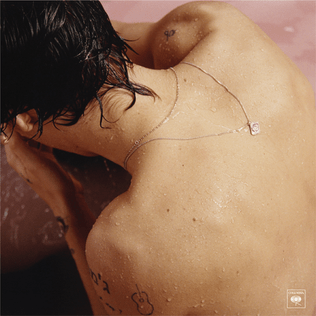
Is former boy band heartthrob Harry Styles the new Jeff Buckley? No, of course not, that’s silly, but you’d be forgiven for initially thinking that when hearing the opening track of Styles’ eponymous debut album, “Meet Me in the Hallway,” a somber acoustic ballad whose ethereal quality and wisp-y vocal performance would not be out of place on Buckley’s seminal Grace.

Buckley is one of several artists to whom the sonic landscape of the album harkens back to; the elegiac “Sign of the Times,” the album’s debut single, recalls the grandiose power-pop ballads of Badfinger and The Raspberries. “Only Angel” sounds like an outtake from Chris Cornell’s 1999 solo debut Euphoria Morning.

If, however, you think I’m accusing Styles of shamelessly imitating artists with richer, more dynamic careers than him in an effort to be taken seriously, I am not. While he certainly wears his influences on his sleeve, Styles still brings his own unique personality and charisma to each of the album’s 10 songs, all of which range from ‘good’ to ‘excellent.’ Some of the album’s highlight include the aforementioned “Sign of the Times,” the slinky “Carolina,” the seedy ‘girl gone bad’ blues rocker “Kiwi,” and the somber “Ever Since New York,” another song with a very Buckley-esque quality.

More impressive than the quality of the songs is Styles’ vocal capabilities; even in the slightest 1D songs, Styles showed himself to be quite a formidable singer, but here he really shows his chops, taking on a variety of tones and colors that show incredible prowess. “Sign of the Times” is probably the best example of Styles’ newfound capabilities, alternating between full throated, emotive belting and tender, Buckley-esque falsetto crooning with incredible ease.

Time will tell if Styles’ debut is a signpost for future greatness for the maturing former teen idol or a fluke; either way, he’s got my attention.

Harry Styles is available through Erskine and Columbia Records. Always support the artist.

No, I Won’t Start Respecting Kenan Thompson

MO960

Earlier this week, the Huffington Post posted an article entitled, ‘After 14 Years, It’s Time to Give Kenan Thompson the Respect He Deserves,’ imploring critics and longtime Saturday Night Live fans to give the veteran cast member recognition as one of the show’s greatest performers.

I wretched.

I have been watching Saturday Night Live for 15 years. I’m a huge fan. I’ve obsessed over every facet of the show, from the sketches to the sordid and endlessly fascinating ‘behind the scenes’ politics. My parents raised me on the works of Dana Carvey, Phil Hartman, Mike Myers, Eddie Murphy, Will Ferrell, Dan Aykroyd, Bill Hader and numerous other legendary cast members who bought a dynamic, versatile and unique range of impressions and characters to show.

Kenan is in no way on their level.

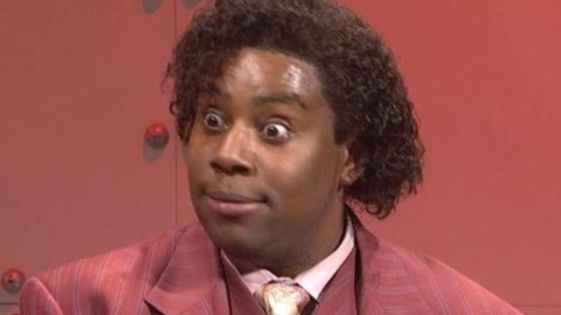
Kenan is always Kenan. His trademark mannerisms and quirks never seem to change no matter who he is playing; he doesn’t disappear into a role the way Phil Hartman or Dan Aykroyd or Will Ferrell or Bill Hader did. His Al Sharpton, his Steve Harvey, even his Bill Cosby carry much of the same peccadillos, even though they are three very distinct personalities. As the article correctly points out, Kenan doesn’t have the prestigious sketch comedy training of The Groundlings or Second City; he is a t.v. actor, and has always been one, and his acting skills aren’t all that advanced from his time on All That. His bug-eyed mugging, exaggerated reaction shots, and contorted facial expressions are not the mark of a truly experienced actor; they’re novice at best. At his most obnoxious, Kenan’s portrayals harken back to the unsavory and thankfully long gone Steppin Fetchit minstrel acts of the 1940s’.

Even if you want to play on SNL’s notorious racial politics and how Kenan could be seen as the first African American performer to really hold a commanding presence in the cast, it still doesn’t make him better than Tim Meadows, Garrett Morris, or numerous other more talented former cast members who are far more diverse and dynamic than Kenan. Chris Rock, as underutilized as he was during his time in the cast, was still a more original and unique voice. Hell, even Tracy Morgan, while not the most technically gifted performer, was funnier, more original and more dangerous than Kenan. Leslie Jones brings me more to the table now, comedically speaking, than Kenan has in his 14 seasons. His most popular sketch, What’s Up with That?, got old after about three installments, because it was built around a thin premise that never changed much from one to the other.

Does it sound like I have a personal vendetta against Kenan? Well, kind of, yea. As an SNL fan, Kenan has kept the show in a limbo stage where it can’t transition from one era to the next. While newer, talented cast members still struggle for airtime, Kenan is out there taking time from cast members who could bring something far more original to the table than his bug eyes and shouting.

No performer should stay on SNL for more than seven years, maybe eight if you’re an MVP (Hader, Hartman, Jason Sudeikis). Darrell Hammond was a waste of space his last five years on the show. Fred Armisen has 11 seasons to his name, but it was clear by his 7th year he had run out of ideas and became a shadow of his former self. Kevin Nealon went from being a prominent cast member to a glorified extra in his final season. It’s time for Kenan to bow out gracefully. He’s not adding anything to the show. He never really has.

ONE YEAR WITHOUT PRINCE.

kkokok

I remember the headline, via Esquire Magazine, vividly:

“There has been a death at Prince’s Paisley Park estate.

A chill ran through my blood. Could it indeed be Prince? The endlessly creative, seemingly ageless juggernaut who as of a week ago was still on tour? It seemed unfathomable; sure, a few days previously he was hospitalized for the flu, but who dies from the flu anymore? Especially someone of his stature.

At first I tried to assure myself that maybe it was an elderly servant who was working a night shift. Surely 2016, which already removed David Bowie, Alan Rickman, Glenn Frey and several others from mortal dwellings, couldn’t claim Prince, too?

But Prince lived alone. He’d famously retreat to Paisley Park for days. He’d lock himself away to write or record. All signs pointed to a grim outcome.

And grim it was.

Within 15 minutes of the initial report, it was confirmed that the death was Prince’s. In a frighteningly ironic twist, he had been found in an elevator, the symbol of downfall in one of his biggest hits, “Let’s Go Crazy.”

It felt like an electrical outage: sudden, unpredictable, leaving nothing but darkness and confusion. I’ve heard his death being described as like losing a color, or something elemental, like the wind or light.

I first became aware of Prince when I was six, and he appeared on The Muppets Tonight. At the time, he was still going by the unpronounceable ‘love symbol,’ and I thought he was incredibly weird. A man with no name? Singing about starfish and coffee (which I later found was not written specifically just for the Muppets)? Why was he so loved?

About two years later, I saw the videos for When Doves Cry and Raspberry Beret on VH1’s Pop Up Video (man, I miss those old VH1 shows). It was the first time I heard either song, and I loved them. When Doves Cry was unlike anything I had heard up to that point in my life (yes, I knew the song was written about 14 years earlier), and Raspberry Beret reminded me of Sgt. Pepper’s era Beatles, which was my favorite album growing up. I wanted to hear more.

I bought The Hits 1 & 2 / B-Sides set at Best Buy, and I listened intently to all three discs. The song that really cemented my fandom was “Little Red Corvette.” I had no idea at the time that the title was a vaginal metaphor, or that the whole song was supposed to mirror an orgasm; I was captured simply by how the song built so excitingly to each chorus, and moreso by those otherworldly shrieks and howls during the song’s climax.

Even though he had long abandoned it by the time I discovered him, the image Prince built his career on still fascinated me: the way he mixed the carnal and the spiritual within his lyrics, how he could come off as both macho and flamboyant with equal conviction, how he could wear lingerie and still come off as more masculine than most men, and subsequently seduce any woman he wanted. He was one of a kind.

Prince always seemed to be engrained in our cultural fabric: he released four albums between 2013 and 2015 alone. He had been tour every year since 2010. He had just launched his first ever solo tour, featuring just him and his piano, and it was hailed as a triumph by fans and critics. Most tellingly, he had announced that he was working on his memoir, entitled “The Beautiful Ones.”

And yet, a deeper look into Prince’s final days reveal a man who may have been more aware of his mortality than he let on. For a man constantly looking forward, the Piano and a Microphone shows had Prince unusually sentimental as he recalled his early days, his collaboration with Wendy & Lisa and the Revolution, his relationship with his father, and even paying tribute to his old protege and lover, Vanity, after her passing in February. Prince was looking back with a fondness and melancholy he had never displayed before.

Photos and videos reveal that despite the excellent musicianship, vocals and overall showmanship of the concerts, Prince had become frighteningly frail. His sickly appearance sucked the life out of his mega-watt smile, and he often looked pain while playing. His face was skeletal, his eyes had no life in them. His clothes hung off him.

Of course, the circumstances of his death – an overdose of a powerful, addictive painkiller most likely brought on by chronic hip pain – have been splashed across the morning papers for the last year or so. It’s still hard to accept that someone as in control of his health and protective of his image as Prince could succumb to addiction, and fans still speculate what really happened: was he murdered? Suicide? Nothing seems to add up.

Prince’s death was like his life: enigmatic, unpredictable, and endlessly fascinating.
The best thing we can do today is to simply listen to the gifts this man gave us, in the form of 39 albums, hundreds of classic songs and a career that will never be matched.

God Bless You, Mr. Nelson.

MUSIC IN THE AGE OF TRUMP, PT. 2: Queensryche’s “Operation: Mindcrime.”

Operation Mindcrime

Fake news. Collusion. Distortion of the truth. The 1 % running the government from behind the scenes. An effort to turn everyday citizens into sheep at the expense of an uprising against the status quo.

Think all of these came about because of the election Donald Trump? Think again.

In 1987, the big story was Iran-Contra, in which the American government secretly sold arms to Iran despite an embargo, a violation of several standing laws and treaties. Iran was certainly not a friend to the U.S., much like Russia now. A Supreme Court vacancy went a record amount of time without being filled (albeit for different and more ethical circumstances than Mitch McConnell’s rejection of Obama). Black Friday drove a stake of any economic confidence the country may have had.

Sound familiar.

Queensryche, the Seattle based metal outfit who had two moderately successful albums with The Warning and Rage for Order (both great records, by the way) were certainly abreast of these issues, and singer Geoff Tate and guitarist Chris DeGarmo became the primary architects behind Operation: Mindcrime, an ambitious concept album tackling government corruption, media manipulation, religious hypocrisy and numerous other topics via the story of Nikki, played on the record by Tate.

The album begins with the dialogue snippet, “I Remember Now,” which finds Nikki coming out of a deep sleep unable to recall his past, left to piece everything together throughout the record.

The instrumental “Anarchy-X” follows as a sort of overture, but it’s the third track, “Revolution Calling,” that really sets the record in gear. It’s the story of a man disillusioned with the world, unable to trust the media, the government or anyone, really. Take a look at these lyrics:

“I used to trust the media
To tell me the truth, tell us the truth
But now I’ve seen the payoffs
Everywhere I look
Who do you trust when everyone’s a crook?”

Pretty damn cryptic, eh? Now read this verse:

“I used to think
That only America’s way, way was right
But now the holy dollar rules everybody’s lives
Gotta make a million, doesn’t matter who dies”
Now think about the health care debate raging on today.

The eponymous next track details Nikki’s recruitment by the mysterious Dr. X, a demagogue of the highest order hell bent overthrowing anyone who gets in the way of his own ideals, which hinge on radical political and religion upheaval. Dr. X becomes quickly aware of Nikki’s political radicalism as well as his heroine addiction, both of which he uses to control Nikki mentally, physically, emotionally. X’s primary mission is layed out in the following track, “Speak”:

“Seven years of power
The corporation claw
The rich control the government, the media the law
To make some kind of difference
Then everyone must know
Eradicate the fascists, revolution will grow

The system we learn says we’re equal under law
But the streets are reality, the weak and poor will fall
Let’s tip the power balance and tear down their crown
Educate the masses, we’ll burn the White House down.”

At this point, it had indeed been seven years since Reagan was elected, and while he is remembered as being a largely beloved and popular president, a significant number of blue-collar Americans faced serious hardships due to the failure of his trickle-down policies that ultimately benefited the rich. It was Reagan who ushered in the influence of the religious right, refusing for years to provide any medical funding towards AIDS treatment out of fear of alienating that particular base due to the stigma of it being a ‘gay disease.’

The attitude towards Donald Trump, justified or not, has been similarly intense: people have destroyed property both in support and opposition of him, he is heavily involved with big business, he doesn’t seem to care the poor, and there have been threats against him.

“Spreading the Disease” follows, and introduces the character of Mary, a former prostitute who has been ‘saved’ by the corrupt Father William, and is now a nun. The song doubles as an indictment of religious corruption, particularly how it interplays with politics:
“Religion and sex are power plays
Manipulate the people for the money they pay
Selling skin, selling God
The numbers look the same on their credit cards
Politicians say no to drugs
While we can pay for wars in South America
Fighting fire with empty words
While the banks get fat
And the poor stay poor
And the rich get rich
And the cops get paid
To look away
As the one percent rules America”

“The Mission” begins with a televangelist asking for money as Nikki asks for God’s forgiveness. It brings us back briefly to the beginning of the album, with Nikki vaguely being able to recall Mary and his relationship to her. The next song, “Suite Sister Mary,” begins with this chilling bit of dialogue:

“Kill her. That’s all you have to do”
“Kill Mary?”
“She’s a risk, and get the priest as well”

This is the mission he sang about in the previous track, and also the turning point of the record, a 10-minute detailing of Nikki going back on his mission when he falls for Mary and instead tries to save her by convincing her that the monastic life she chose is hollow and mired in corruption:

“Mary, Mary just a whore for the underground
(They made you pay in guilt for your salvation)
Thought you had them fooled? Now they’ve sent me for you
You know too much for your own good
Don’t offer me faith, I’ve got all I need here
(My faith is growing, growing tight against the seam)
What we need is trust, to keep us both alive
Help us make it through the night.”

After having killed the priest, Nikki realizes that Dr. X is the real villain, in his manipulation and mind games:

“No time to rest yet
We’ve got to stop his game
(Before madness has the final laugh)
Too much bloodshed
We’re being used and fed
Like rats in experiments
There’s no final outcome here
Only pain and fear
(It’s followed us both all our lives)
There’s one thing left to see
Will it be him or me?
There’s one more candle left to light.”

“The Needle Lies” is another fast-forward, with Nikki in his cell recalling his heroine addiction and how Dr. X preyed on it. The song is basically a realization of how any peace he may have achieved in his addiction was false. “Electric Requiem” takes us back, to when Nikki finds that Mary is dead, leading us into “Breaking the Silence,” realizing how bleak and empty his mission was and how it stood in the way of what really mattered:

“They told me to run, but just how far?Can I go wearing the black mask of fear?
The hate in my eyes always gives me away
The tension building slowly
Now I lost everything I had in you
Nothing we shared means a thing
Without you close to me
I can’t live without you.”

“I Don’t Believe in Love” continues on this theme, and was also one of the album’s major hits. It is the culmination of how severe Nikki’s paranoia and isolation has become, leaving him unable to feel, to trust, to love, while trying to convince himself in vain that he never loved Mary:

“No more nightmares, I’ve seen them all
From the day I was born
They’ve haunted my every move
Every open hand’s there to push and shove
No time for love it doesn’t matter
She made a difference
I guess she had a way
Of making every night seem bright as day
Now I walk in shadows, never see the light
She must have lied ’cause she never said goodbye.”

“My Empty Room” is a prelude to the album’s final track, “Eyes of a Stranger,” the album’s best known song. Nikki is now fully aware of what has happened. He is alone, feeling like a stranger, unable to go back to what he once was in lieu of the chaos that has occurred in his wake. The album’s last sound is an ominous drone with Tate as Nikki reaffirming the album’s opening: ‘I remember now.’

Operation: Mindcrime is a brilliant record, filled with great songwriting, musicianship, and outstanding vocals from Geoff Tate. The songs are deep and complex, but also completely accessible, with powerful hooks, riffs and choruses that draw the listener into the story without sacrificing the depth of the lyrics. Its top-class craftsmanship combined with its searing relevance to this day make it an essential listen in these times.